


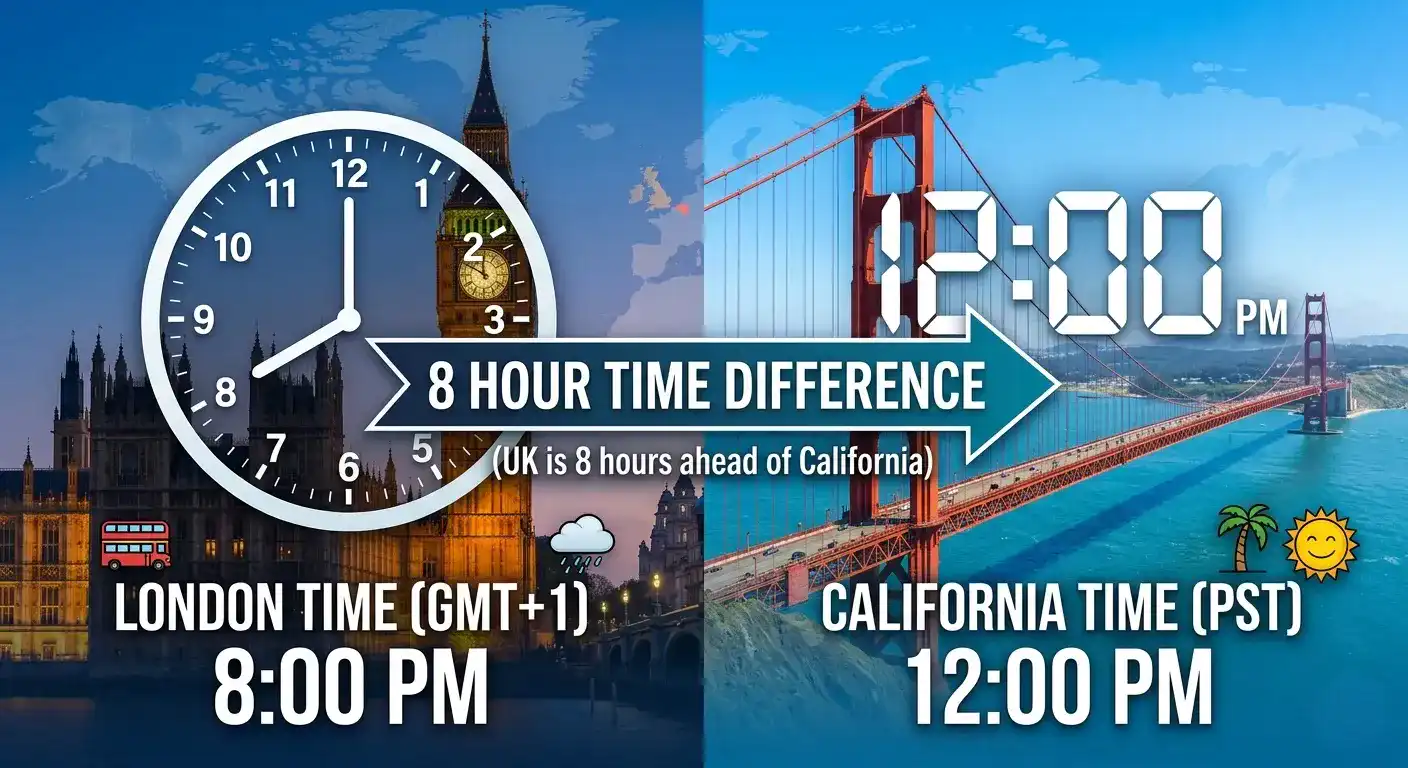
Navigating time zones can feel like a puzzle, especially when you’re dealing with places as far apart as England and California.
So, if you need to meet people virtually, travel from one place to another, or conduct a meeting with a friend or business partner, it is essential to keep the differences between these two regions in mind.
In this guide, we’ll break down the time difference between these two regions, accounting for daylight saving time changes, and sharing practical tips to make coordination easier.
We will also discuss reliable sources, including official DST schedules and time conversion tools, to ensure you have a clear picture by the end of the discussion.
The Basics of Time Zones: England vs. California
England, part of the United Kingdom, primarily follows Greenwich Mean Time (GMT), which is UTC+0 during standard time. When daylight saving kicks in, it shifts to British Summer Time (BST), or UTC+1. On the other side of the Atlantic, California operates on Pacific Time. That’s Pacific Standard Time (PST) at UTC-8 in winter and Pacific Daylight Time (PDT) at UTC-7 in summer.
For most of the year, England is 8 hours ahead of California. So, if it’s 9 AM in Los Angeles, it’s already 5 PM in London. But this isn’t set in stone; daylight saving time (DST) in both places can tweak that difference to 7 hours for short periods. This variability stems from the fact that the US and UK don’t perfectly sync their clock changes.
To visualize this, here’s a quick look at a world time zone map highlighting the regions:
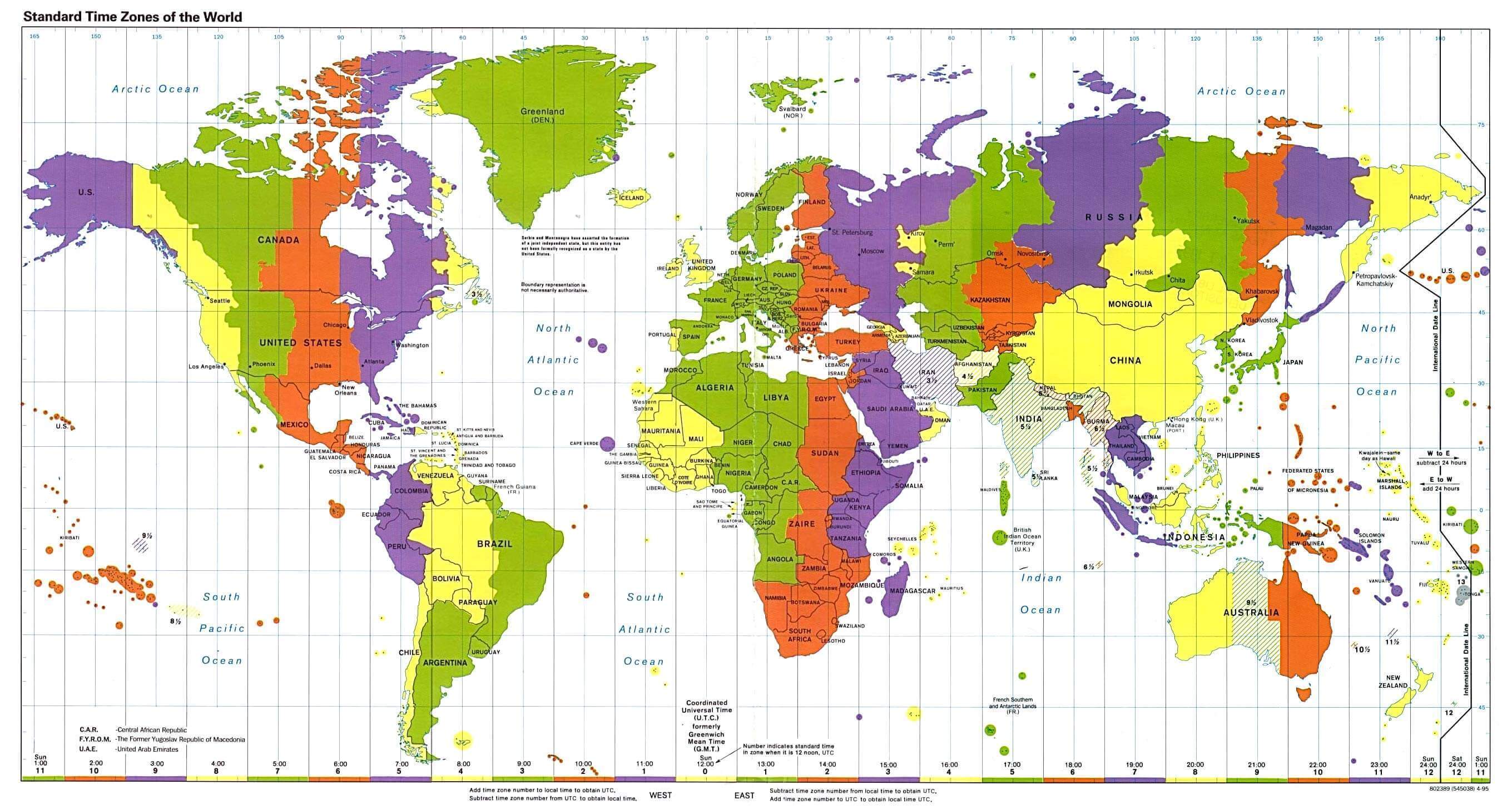
US Time Zone Map – Guide of the World
This map shows that California’s Pacific Time Zone lies far west, while England’s spot near the prime meridian puts it in the Central European Time Zone.
How Daylight-Saving Time Affects the Difference
Daylight saving time is the main culprit behind those occasional shifts. It happens in the United States of America every year. In the United States, DST starts on the second Sunday of March every year. It simply means that DST will start in the United States of America on March 8. Additionally, this DST will end on the first Monday of November.
On the other hand, DST is different in the United Kingdom. It is known in the UK as British Summer Time. The last Sunday of March is the starting date, while the last Sunday in October is the last date. So, in 2026, the start is March 29, and the end is October 25.
These mismatched dates create windows where the time difference drops to 7 hours:
- Mid-March to late March (e.g., March 8–28, 2026): California is on PDT (UTC-7), but England remains on GMT (UTC+0) until the end of the month, resulting in a 7-hour time difference.
- Late October (e.g., October 25–31, 2026): England switches back to GMT (UTC+0) first, while California remains on PDT (UTC-7) until November, again, 7 hours.
For the rest of the year, it’s a steady 8-hour difference. Here’s a table summarizing the 2026 periods:
| Period | England Time Zone | California Time Zone | Time Difference (England Ahead) |
| January 1 – 7 March | GMT (UTC+0) | PST (UTC-8) | 8 hours |
| March 8 – March 28 | GMT (UTC+0) | PDT (UTC-7) | 7 hours |
| March 29 – October 24 | BST (UTC+1) | PDT (UTC-7) | 8 hours |
| October 25 – to October 31 | GMT (UTC+0) | PDT (UTC-7) | 7 hours |
| November 1 – December 31 | GMT (UTC+0) | PST (UTC-8) | 8 hours |
This setup means the difference is 8 hours about 90% of the time but always double-check during those transition weeks.
Real-World Examples and Conversion Tools
Let me give you an example! You are in San Francisco, and it is noon. When you want to see what time, it is in London, it is convenient to say that it is 7 PM or 8 PM there. It totally depends on the window, which can be a 7-hour or 8-hour window.
For quick conversions, sites like TimeandDate.com or WorldTimeBuddy are lifesavers. For instance, TimeandDate’s converter shows that as of a recent check in early 2026, London was 7 hours ahead of Los Angeles during PDT but pre-BST. Tools like these let you plug in cities and get visual sliders for meetings.
Another handy one is 24TimeZones, which highlights optimal calling windows. If you’re in California, call England in the morning (9–11 AM PDT/PST) to catch them in the late afternoon (4–6 PM GMT/BST). Reverse it if starting from England: Their late afternoon hits California’s morning.
Best Times for Calls, Meetings, and Travel
Scheduling across this divide? Business folk in Silicon Valley often deal with London counterparts in finance or tech. The sweet spot for video calls is typically 8–10 AM Pacific Time, which is 4–6 PM UK time—overlapping work hours without anyone burning the midnight oil.
For travelers, jet lag is real. Flying from LA to London? You’re jumping forward for 7–8 hours, so expect to feel wiped upon arrival. Pro tip: Adjust your watch mid-flight and try to sleep on their schedule. Coming back, the reverse can make you wide awake at odd hours—use it for early productivity.
Fun fact: This time gap has shaped pop culture exchanges. Think about how UK bands touring California had to sync rehearsals, or how live events like the Oscars air at awkward times for British viewers (often starting around 1 AM their time).
Historical Context and Why It Matters Today
It is essential to mention here that GMT was introduced globally in 1884. The event was the International Meridien Conference. At this time, it was decided to keep the timing central to London’s Greenwich Observatory.
Another important point to remember is that the Pacific time zone, which we can make specific to California for now because we are discussing this region, was later determined to meet US railroad needs.
We live in a connected world today, where our benefits are linked to each other, and time differences play a major role in keeping us all connected. So, if we want to stay connected, we must understand that California markets start trading only after London markets wrap up. Therefore, companies, including Google in California, prepare accordingly to deal with time zone differences. It is possible only through automatic time zone detection.
One unique angle: During those 7-hour periods, same-day coordination for urgent matters can actually be a tad easier, giving an extra hour of overlap.
Wrapping Up: Stay Synced and Save the Headache
Overall, we find a difference of 7 to 8 hours when exploring the time difference between England and California. It generally depends on the season. We recommend using online converters. You also need to plan your shifts according to DST to minimize timing clashes. It will help you avoid “oops” moments, which means less frustration or embarrassment. For a deeper dive, check out interactive maps or apps that notify you of changes.
Here’s a US time zone map for context, showing California’s place in the Pacific band:

